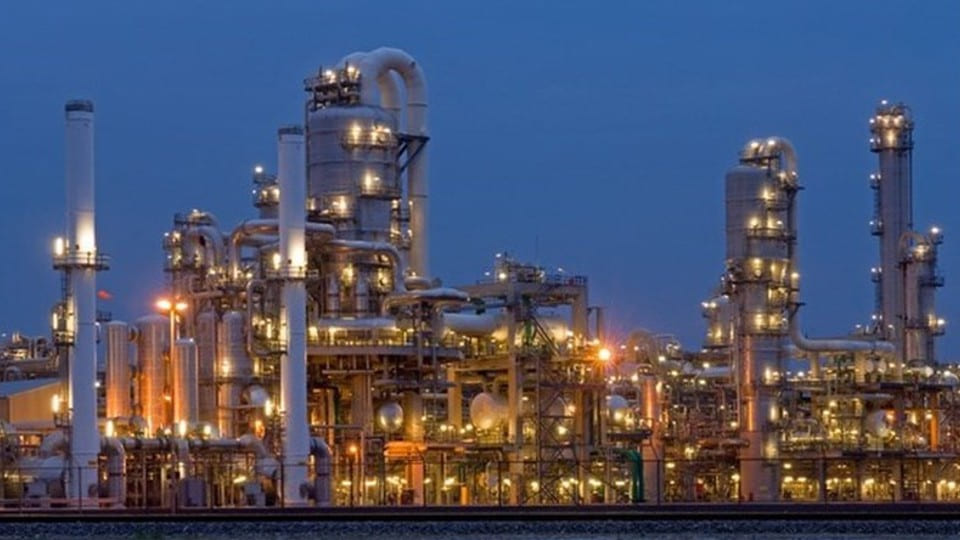
Tabriz Petrochemical Complex is located on a land area of 391 hectares and an altitude of 1,362 meters above sea level in the southwest of Tabriz city and in the western vicinity of Tabriz Refinery.
The implementation of the Tabriz Petrochemical Complex plan was approved in the 1366 budget law of the whole country and the general outline of the plan was approved by the board of directors of the National Iranian Petrochemical Industries Company in February 1367. Design and engineering activities began in the second half of 1368 and installation operations in 1371.
The feedstock of the complex is light and heavy naphtha and liquefied gas, most of which is supplied from the Tabriz Refinery.
The olefin unit was launched as the mother unit of the production process in January 1375, and after that, the polyethylene and polystyrene units were put into production under the license of TPL of Italy and Technip of France in 1377 and were officially opened.
The aromatic unit was also put into production in 1378 under the license of BASF of Germany.
The butadiene extraction and ABS production units, which are considered the first development plan of the complex, entered into operation in July 2003 under the license of Krupp Koppers of Germany. In 2005, the pentane unit and in 2010, the resistant polystyrene unit 2, which was designed by the complex’s experts, were launched, and the SAN unit (feedstock for the ABS unit) is in the detailed engineering stage.